Friday, April 10, 2015

Singapore Slung

I had quite forgotten what being alone was. There was no sense of woo ha, I have freedom baby. Freedom, according to Janis Joplin, is another word for nothing left to loose (Me and Bobby McGee). I had no wild imaginings of singledom, there was just me, my thoughts and no one to bounce them off. 

It had been an uneventful journey, on the Aeroline bus, six hours from Kuala Lumpur to Singapore and I hardly saw it pass. There had been a mild panic when I nearly didn't get to the bus on time, but I did, just, and all was well. I left with thoughts of once more consuming a Singapore Sling at Raffles Hotel, but ordering for one does, really, seem a little sad.

No sooner had I 'landed' than I was having a quick Mos Burger, and a cup of something which really did resemble liquid moss, at the Harbourfront complex. Then I was left to tackle Singapore's MRT. Somehow my brain still hadn't slipped into 'foreign country, beware' mode. I hoped that it soon would, as I felt too comfortable, too safe, and therefore too vulnerable in what, let's face it, is another country.

Travelling into Little India was easy, with thanks to Singapore's MRT. A short walk and I was at Hotel 81, Dickson Road. I showered. Went to use the towels, they were dirty, something red which I assumed was lipstick. I called the front desk, stood dripping water, and waited for the service staff to bring me fresh towels. Drip, drip, drip.

The following morning, having had those towels changed, I came out of the shower cubicle and happened to really look at the big mirror right over the bed. One corner of that mirror had partially dried drips of red. Cautiously I rubbed at a minor drip with a tissue. It was blood. Of that I was in no doubt. I was tired when I retired for the night, and obviously did not take enough stock of my surroundings. How else could I have missed the blood. The only question that remained is just how did the blood reach so high on the mirror. I am six foot, the drips were well above me. I went down to reception, iPad and photo on hand. Just what the hell had happened in that room. I changed my room, upgraded to one with a window. I like windows, they are friendly. The mystery of the blood remained.

Back in the hotel, bored, I switched on the flat screen TV. After a few minutes watching the endless drone which is Singaporean TV, I realised that when one young man becomes charged with sedition, just because he lampoons the Singaporean government, you know you are are in the wrong country. To the casual glance Singapore is a heavenly fusion of well, just about everything. The closer you look, you realise that Singapore is just the Ken and Barbie version of a nanny state American Chinatown, right down to the latest police initiative to make road users more considerate. Well Singapore it hasn't worked for MRT users why should it work for road users.

The day before I was transversing Singapore by mass rapid transit. The potential passenger is inundated by signs. Stand here, don't sit there, remove back pack, don't drink, eat, fart etc etc etc. Of course they are only signs, and mostly ignored. I was nearly bowled over by an elder Chinese woman pushing her shopping trolley before her. I was trying to exit the train. She was supposed to give people exiting trains enough room to do so. She didn't. If I hadn't quickly sidestepped she would have rammed straight into me.

Another day and it was another Breakfast, once again Banana Prata (aka Roti Pisang) with Fish curry, my coffee (kopi) tarik metamorphosed into tea. Rain threatened as a Dutchman asked what i was eating. I informed, he wandered off, did he order the same? He did. Hans. A fellow writer. Lived in Yogyakarta and travels every six months. He invited me over. We talked. He is a translator,  writes and had been in Indonesia for over twenty years. He was a couple of years younger, and was due to fly out the following lunch time. We arrange to meet for breakfast the next day. Hans, it seems, did not give me a complete email address, and did not show for the morrow's breakfast. Not the first time it has happened.


Singapore presents as a more expensive Kuala Lumpur, safer, cleaner and more law abiding. Under the surface it is every bit as repressive as it's much larger neighbour. In Singapore the heart seems to be missing, but the wallet, or credit card is ever there. It is an island city state in love with all things bling. Singapore is twice as expensive as Malaysia, too false and too young. It is a city to be young in, to be drunk in, to party and eat heartily in, but not live in (if you are over 35). Singapore intends to be the art hub of South East Asia, it probably will be, for Singapore and Contemporary Art have much in common. See my other blog.....http://correspondences-martin.blogspot.com/2015/04/play-it-again.html.

Saturday, April 4, 2015

China Diary 2015


China my China

After a smooth landing, there are brief moments of beauty while we are whisked from the airport to Hangzhou city, capital of Zhejiang province, China. Travelling through the dense, new, city, suddenly, unexpectedly, an ancient bridge looms from out of the traffic hustle. It is not the only surprise. In small parks, silent statuary stands, surrounded by city hustle bustle. A half naked man, no flasher, practises silent Kung Fu. He kicks bare naked legs, waist high, thrusting a deadly foot into yielding air, as if in readiness for some Jackie Chan film role or some age old battle, yet to be won. Curiously large pansies accompany early spring roads which remain winter grey; bystanders are clothed in black, human crows waiting for city carrion, on Huangcheng Road (South).

All is well. Bright orange marigolds, symbols of death in Mexico, are a mere decoration in China’s Hangzhou. They shine from green leaves by multiple traffic lights, the stark contrast between man and nature made all the more apparent. The German made vehicle glides along cherry blossom laden Baochu Road and, eventually, after some debate with uninformed uniform clad officials, to the hotel.

The hotel, in reality, are rooms normally reserved for Chinese upper echelon civil servants, situated amidst the West Lake Botanical gardens, the magnolias, Japonica and calming cherry blossom. Hangzhou Botanical Garden can be found at the foot of Jade Spring Hill in the northwest end of West Lake. Hostile Mandarin is exchanged at the gate, for few are honoured with a stay in this park of peace. The guards persuaded, and the room shines with antique wood and Hungzhou welcome. Only the marble's icy floor punishes a wayward step, an acute reminder of the cool season. At night, as temperature drops, there is no sound. As darkness envelopes the gardens, silence too descends.

In the darkening, and before the evening repast, we are guided to the original site of what eventually became the China Academy of Art. Beside the West Lake itself. Yet before we are able to reflect upon those buildings (one time housing a small zoo), we are taken to see the original house of seals, the gate of which was torn down in the zeal of the Cultural Revolution, but has since been rebuilt. I am in awe at the sheer beauty and curvatures of the ancient Chinese script adorning standing stones, and carved into pillars. Seals, the red oil and silk marks frequently seen adorning Chinese ink and brush paintings, hold a unique importance in Chinese society. In antiquity everyone, and especially the illiterate, had to have a seal as their signature. A elder identity card. Seals are still revered, especially for Chinese artists, adding a red grace to ink and brush paintings, stamping both identity and heritage in a silent proclamation of ancestry.

Our day is not done, but just begun. After a late dinner of Hungzhou regional delicacies, surrounded by notable Chinese cinematographers, film producers et al, but no duck tongues at 'Grandma's House', we are swept off to the Shan Tan Museum of Modern Art, where an interview is to be recorded. Tracked by careful cameras, we discuss creative artworks. We ponder the immediateness of brushstroke versus the planned painting, of Chinese ink and of oil, of Shuen paper and of canvas, of Abstract Expressionism and of China's Neo Literati.

In that exhibition, an especial hanging for the documentary being shot, we smile, discuss, debate. We point pseudo-intellectually at painterly expressions, grimace where needed, gesticulate. We mock argue on cue and delight in the play acting like two naughty school boys, one an artist/intellectual, the other a writer. 'Take one' evolves into a multiplicity of takes. The ever polite producer coaxes artist and interviewer until her almost sensual satisfaction is reached. More smiles. Another, brief, interview - me this time. The charming producer solicits the final words on my interaction with the painter, my interest in his painting, and in China. It's a wrap. Multiple thank you(s), and the evening finished. Time to wrangle, once more, with officious officials at the gates to the Botanical Gardens.


Hangzhou Morning

In the chill of the Spring morning we awaken, stretch, gain our bearings. Abandoning the luxury apartment, its silence and its abundance of wood, and lack of breakfast, we saunter a few kilometres to the nearest promise of food. Our park wonderland, that oasis of botanical calm, provides the means to work up an appetite, denies the means to satiate it. We walk through the park, marvelling at yet more magnolia, head towards the West Lake (Xi Hu) proper, and eventually seek morning sustenance in a very small eatery. It is not the epicurean delight we had expected. Soggy Chinese filled bun (Pau) with a meat filling was all we could manage. The meat could have been anything, but we hope is an animal normally domesticated for such purposes, though recent stories of China tell us it could be otherwise. For the second day running, we discover that the Chinese really are not a nation of coffee drinkers. All manner of teas are available. Simple teas, which involve no more effort than the placing of leaves in a receptacle, are drunk with hot water. No milk, no sugar. Coffee is not on offer. Coffee is for foreigners and, like the English language, is not to be encouraged.

Why then, I hear you ask, does Starbucks exist just across the road. It is the very same argument. Starbucks is for foreigners, tourists and their ilk, not for the average Chinese. Only Chinese middle class, men of the extreme short back and sides hair styles leaving a carefully coiffured mop on top variety, and women in the oh-so-cute short fur jackets, frequent those relatively expensive watering holes. Starbucks is a place to be seen drinking, egoistically, Western coffee in. And they are the sort of Chinese who not only purchase, but use, a 'selfie stick' with their mobile phone. Tea is the Chinese drink.

West Lake, Hangzhou, teems with nearly as many visitors per annum, as it does fish. The three major causeways across the impressively ostentatious lake, resound to the tramping of footwear from the young and the elderly, but not infirm. Rented bicycles threaten the slower pedestrians, and wind enraged kites, others. Tai Chi practitioners earnestly perform their gentle exercise to the sound of high flying birds and the rustle of winter dried lotus plants. Children are not overtly in abundance. Twenty and thirty something's are. Aged Chinese smoke their much slower way over the waters, while one exuberant selfie proponent asks, in broken English, if she could take a photo with me. I answer in the affirmative, she clicks and is away with a big grin. Moments later she collars an elderly gentleman and is back, thrusting her mobile phone at him, requesting more photos. She settles for a picture of the two of us, elder gentleman's thumb included.


The 1928 Academy, at one remove

Outside Hangzhou, the China Central Academy of Art sprawls amidst a variety of trees, shrubs and flowering plants. Although I remain unimpressed by Brut architecture, I have to admit that the art school has made many attempts to romanticise the singularly functional nature of my least favourite building material. There are interesting shaped 'cutouts' from the concrete, with others unfortunately reminiscent of World War Two, British, bunkers. Bamboo and wood have been manipulated to great effect, but this casual visitor is less impressed with the buildings than with the surroundings.

Perennial young students, on practically silent electric scooters, passively ride from lesson to lesson with no sign of a rebellious spirit. Their hair and body shapes are almost interchangeable, one with the other. In China's Brave New World, graffiti has limited itself to the odd stencil of Youtube, mainly on footpath lights. It is a token, a brief candle of rebellion. Buildings remain free of any sign of a rebellious art spirit. The majority of everything is in Chinese, and few speak English. The interesting art bookshop sells books only in Chinese. It is frustrating, but entirely understandable. This is, after all, China, where I and my language are foreigners.


Boating Away

Today is devoted to strolling and boating. We ramble to a small island inhabited, seemingly, by the elderly and young lovers. The young arm in arm, short fur jackets nestling heavy, old fashioned, wooden overcoats. Freshly permed hair briefly brushes partly shaven male heads, brief longing looks exchanged but no smooching. In public, China's young remains chaste. The not so young brush the air with arms and legs in movements of Tai Chi and Chi Gong, begun centuries before. Slowing, the property's of this gentle exercise move in a circle, scarcely more ambient than the statues on other parts of the island. One permed elder looks up from her ethereal dance, glances at the foreigner, me. For a moment she continues to glide caught in my glance, but quickly the spell is broken, and she returns to her meditative movement.

A couple alight from a small ferry craft, at the side of the lake, just near to where we stand. We debate, hurriedly, as whether we should walk or float. We opted to float. The river Styx, Yannis Markopoulos and Who Pays The Ferryman comes to mind, but the boatman is pleasant enough as his one oar slaps the water and we are guided through one if China's most beautiful lakes.


Another Morning in Hangzhou

While Hangzhou, and its surrounds, is known for a myriad culinary delights, this fact has not reached the cooks at Hotel Huabei. The obligatory breakfast, which began our stay as mediocre, has quickly descended into inedible. This morning I seek refuge in KFC, and tackle a flaky pastry bun wrapped around bacon, egg, Mayonnaise and lettuce. It comes as a set with the long, deep fried, dough, which in Malaysia is known as Char Kuay and in China ‘youtiao’, and the usual fast-food-joint coffee. This is in marked contrast to the creative gastronomic delights we have been savouring, curtesy of our hosts, at various well-appointed restaurants around the city of Hangzhou. The hawker foods too radiate with oriental mystery, and delectability. Yesterday's mid-morning repast consisted of Beggars's Chicken, Tea Chicken, battered, deep fried crabs and strangely conical steamed dumplings resembling nothing more than miniature pastry wine carafes. These were but a fraction of the interesting foods available.

The weak Chinese sun, which has played hide and go seek since the begging of our stay, remains hidden today. My wife, is sick, in the hotel room. I am alone, ordering Chinese food, in China, without the luxury of the local language. It has become a matter of 'smile', 'point', 'smile', 'pay', 'utter something which might pass as thank you in Mandarin' and collect what is given. Overall, staying in China continues to be an interesting experience.


Old Town Blues

The journey from Hangzhou West Lake, to the antique town of Xi Tang was largely grey and mist enveloped. Unimpressive small holding buildings, long clotches of vegetables and partially mist shrouded fields made the arrival to the town all the more special. Aside from a momentary wrangle regarding tickets, of which we had none (being guests of the preserved town's director, Zhong Xiao Sheng) the entry to Xi Tang town was as interesting as it was painless. The walk through the tourist crowds was immediately reminiscent of Malaysia's Malacca, on a very busy weekend. It is a dilemma, this ancient town needs tourists to survive, but the very same tourists hail the town's demise. Zhong Xiao Seng mentioned that a future plan is to limit the amount of tourists, leaving just enough to provide the much needed finance, while reducing the amount of feet tramping over the old stone bridge and, hopefully, reducing the sticky fingers wearing away the Han Dynasty walls. 

As evening brightens the lights and darkens the buildings, I sit on an old stone wall eating fresh strawberries watching tourists, of which there are plenty. The cold of the stone wall seeps through my Marks and Sparks cargo pants and reminds me that I must move. 

Early morning, at least early for me. Seven am, the smell of yesterday's strawberries permeates the Kai Xun Boutique Hotel room. In Xi Tang old town the tourist cameras are already clicking. Hordes of early birds tote weighty zoom lenses, or simple iPads/iPhones, pointing and shooting at anything that doesn't move, alleyways, walls, each other and themselves. Most especially themselves, for this is the age of the ubiquitous selfie and unashamed narcissistic self promotion on WeChat, even in China. 

While boatmen cleanse the various rivers of the previous day's tourist discards, camera clicking tourists snap the men working. After the comparative silence of an early breakfast of Chinese buns (Pau), softly lilting songs by some Chinese songstresses drift above the raspings of the ever present renovation, and the toot tooting of hard working motorcycle vans. It is a chill day in March, but the dark clothed Chinese tourists are not deterred from their tourism, not even by the exorbitant prices for a humble cup of coffee (Y38...Rm19). Perhaps coffee has become a symbol of status in China. Bourgeois replaced by beanois.

A living, breathing, brown, young llama is tethered to a pillar in the centre of Xi Tang Mei Shi Guan Restaurant, where we, like Hobbits, eat a second breakfast. Customers in winter clothing drink watery soya bean in small bowls, eat fried dumplings with piquant chilli, unperturbed by the presence of the llama or the background of contemporary Chinese Muzak. I want someone to say "Mind my llama, no he isn't called Dalai, excuse me I have a cold." It would sound like an old skit from Monty Python's Flying Circus, perhaps with John Cleese and Michael Palin or, in another age, Peter & Dud. I absently wonder, are Chinese Food and Hygiene Regulations so very different from other country's then. For a brief moment the restaurant is lively as the llama escapes his tether and goes off in search of food. He (I presume it is he) trots behind the tea counter seeking what - the every elusive and much over priced coffee, perhaps. The llama makes a dash for the door. Recaptured, it is fed grass in the centre of the restaurant and settles, as does the restaurant and its customers.

On the drive over to Xi Tang, I had wondered where all the local inhabitant had gone. Few people were seen in the fields along the way. I found them. They had quite obviously split themselves between the ancient town of Zi Tang, and Hangzhou's West Lake. Towards lunchtime the small cobble streets of Zi Tang thronged with myriad Chinese, and a smattering of foreign visitors. The crowds so dense that it was a struggle to pull through them, to reach my hotel.The following day I sit on my favourite Chinese island (for now), and encounter the second half of the Chinese population. They are led, frequently by orange hatted ladies carrying flags and shouting orders, commands, or other instructions into head strapped microphones. These groups roll in and roll out if the park, like human waves crashing against the park's antique standing stones, bearing poetry.


Walk me to the end of Zi Tang town 
where moon faced children 
float bubbles 
which fly 
over ancient bridges 
dispersing
on the 
Persistent chiselled rock 
of memory.


It is the last day. The calm before the storm of the Kuala Lumpur conference. I sit alone, once more, in the island park,watching locals take endless mobile phone photos, and I am tired. 


Air pearls 
in Hangzhou West Lake, 
fish released, 
Floating
Like ferrymen
Pop before my eyes only
Sad
Brown
Lotus 
bows its winter head.

Pagoda
Silhouettes
March 
Sunday visitors 
Witnesses
To green flecks
Of Burgeoning Spring
In permeating heat

Cherry blossom
Parades
Against
Willow green
By half moon
Stone bridge
But I am alone
In the park
With no one 
to 
tell.


Thursday, April 2, 2015

Harry on sundown aka A Day at the Zoo

'No wife, can't stay, have to go.'
The greasy Immigration official hurumphed matter-of-factly as former Blicton on Sea Headmaster Harry Wainscott stood before him, bemused.

'But I live here, how can I stay, this is my home', the older Englishman meekly asked, ignoring the spittle on the other's uniform.

The uninformed uniform countered, 
'No wife, no stay, get another wife.' It was beginning to sound like a refrain from Bob Marley.

From the immigration official's perspective it all seemed so simple. Why hadn't Harry thought of it too. Harry questioned, did the blue uniform actually have an inhabitant, or did it have crassness as a primary drive, guiding its lack of civility and compassion.

There were times in Harry's life when pith just missed him, he became pithless in a time worthy of pith. Harry was unable to air a pithy retort, with the low drone of the immigration official's pronouncement drumming at his ears, and heart.

It had been embarrassing, and more than a little nerve shattering for Harry to admit, Oscar Wilde's Ernest like, that he had misplaced his spouse three years previously. Though misplaced may not have been one hundred per cent correct. She had walked out, with an Australian Sheep herder, heading, ironically, towards Harry's Blighty. That was the last he had seen of her, in a blazing June, three years hence.

Harry, stalwart fellow he, had girded his loins and had prepared to humiliate himself before the gargantuan of Malaysia's Immigration Service, some embarrassing conversation regarding his lack of spouse for a spouse visa, and some reasonable suggestions as to how to put a wrong situation right. What he had not been prepared for was a sniggering reception staff, who could barely contain a guffaw as he handed Harry over to his larger colleague who, seemingly, found Harry's plight a constant source of amusement.  


'But to get a divorce and a new wife, I first need to find my old one. But, I don't know where she is'. 

The officious official harrumphed once more, gave Harry his passport back and suggest that Harry leave the country on or before the date his visa was due. It was with a heavy heart that Harry mooched out of Shah Alam Immigration Service that morning. Harry had read about nomads before. They had tents didn't they, camels perhaps. 

'Now where the hell am I to get a tent and camels in downtown Selangor State, Malaysia', Harry idly wondered...... 

Tuesday, January 6, 2015

Coffee is Love (Ti Ammo)


We had travelled the long road back to the State of Penang, Malaysia, for Christmas. The sleek red Ford Fiesta weathered the vagaries of the tedious North/South Highway, it's constant driving rain and it's appallingly showy crashes of thunder. We arrived safely at Bukit Mertajam, despite all that Thor could do to prevent it, and encamped at the family home.

The very next day, severely grumbling tums enticed us to escape semi-detached isolation, and head for Bukit Mertajam town, for breakfast. Having eventually parked (no mean feat), we traversed the crowded market, it's slippery vegetable discards path, the load and intense sellers of roasted pork and deep fried bread, once more to return to our favourite coffee emporium - Ah Hup's Kedah kopi (coffee shop).

Two years on, and Ah Hup sported a brand new haircut. As time as sauntered in that small backwater town, Ah Hup has become increasingly famous in the vicinity for his winning smile, his easy manner and his unique Three Taste coffee (San Wei). The ever benign Ah Hup, a third generation coffee roaster, recognised us immediately and presented us with yet another cup of delectable coffee, served to our collapsible stainless steel table within his tiny cafe. It was the fifth cup of coffee between my wife and I. It was called D’ammo. I thought he said Ti Ammo (Italian for love), a short lived confusion ensued with me imagining a non-existent romantic streak in that Penang town. It was soothed over by the coffee's seductive cream and chocolate sauce. The previous four coffees had been of the 'stretched' or 'Tarik, variety. Coffees Malaysia is increasingly known for.

I am fond of talking about his coffee, so apparently is Ah Hup. As he was making a cup he explained how he roasts the coffee beans himself, careful of the Indonesian and local blends, pouring love into the mix and experimenting with smoothness and taste, to the sheer delight of Bukit Mertajam. Having sent his son to Penang Island, to learn mechanical techniques in coffee decoration, Ah Hup found that it was just as proficient to use the traditional method of 'stretching' the coffee between two stainless steel mugs, allowing air to enter the fluid, and creating his 'cappuccino' froth by that method. He was scornful of the pressurised espresso machines, foreign branded coffee houses use.

Having tasted yet more of Ah Hup’s coffee, it is no wonder that we return, but an even greater wonder that Ah Hup recognises us. Wonder I had, until I caught sight of the photo Ah Hup’s son had taken of us, together, two years ago, now proudly displayed on his white tiled wall. As we drank, coffee after delicious coffee other, local, patrons looked between me and the wall containing the photograph. A debate ensued, was it me, or wasn't it me. I had no idea of the conclusion. I was tempted to ask, but declined.

As we imbibed Ah Hup’s creative caffeine, savouring each gulp and secretly wishing never to leave, his son told us one very surprising thing about his father. Ah Hup, now so well renown for his superb coffee blending, doyen of all appertaining to coffee in Bukit Mertajam, does not drink coffee at all. The son’s statement was left hanging. I could think of no response, but to drink another mouthful and just be glad that Ah Hup’s undoubted skills included the manufacture of untasted coffee. 

Ah Hup also produces, and sells, Kuay Chap (a wide flat rice noodle), from a stall, near his cafe. The Kuay Chap begins its existence as a thin rice flour batter, spread onto a warmed wok, much like a pancake or crepe. It cooks with a thin layer of pork fat and resembles a very large crepe when cooked. The cooked crepe is spread on a stainless steel surface, folded and allowed to cool. The cooled Kuay Chap is torn into bite-sized pieces, then sun-dried. This wide, flat noodle is the basic ingredient for the flavoursome Kuay Chap soup noodle. This delicious dish is made from a whole duck and its innards, broiled with pig's tongue, pig intestines, many whole bulbs of garlic and litres of dark soy sauce mixed with water. The whole is served in small bowls with fried garlic, the cooked intestines and cut, boiled, chicken's egg.

Within Ah Hup's home stand many antique machines. He had recently renovated an eighty year old ais kachang (ice) scrapper, and was in the process of renovating an eighty-plus-year-old coffee grinder, intending to use the latter in his home production of unique roasted coffee. After the Grand Tour, Ah Hup took us to see his friend, who continues to roast commercially.

Mr Yeap Thay Oh, was born in China and migrated to Malaysia with his family at the age of eight,. He glady showed us around his small coffee factory, while Ah Hup explained that his family had owned similar factories over the generations, but had gradually sold each off. His friend, Mr Yeap produces 'Cap Bungalow Glory' (morning glory) brand coffee (kopi campuran) of Penang of State, from the Kampung (village) Berapit.


Slowly, the story of coffee and Malaysia was unravelling for me. Previously I had written about coffee in Ipoh, Perak. Bukit Mertajam was a fresh insight for me. But I have the feeling that there is yet more to Malaysia’s coffee story…… 

Friday, December 5, 2014

It's All for Charity


We were being charitable, paid our dues, were giving in the spirit of the season. We had wended our way through the outskirts of Kuala Lumpur, in my wife's little red devil car, inveigling our way into the heart of the city. Waze guided us through the evening streets to the grandest of hotels, and our be forested destination. We were quietly optimistic.

In the beginning, the search for relief was frustrated through the casual lack of signage. Once relieved, however, we stood, in what may have been an entrance hall wondering just what on earth was supposed to happen. European regional accents abounded, and one or two from my own country.  It appeared to be mostly an expat get together, a gathering of pale people in the very heart of what had been distinctly non pale colonial Malaysia.

I am generally ill at ease at such functions, perhaps it is through my lack of social graces, or through some bizarre quirk in my psychology. Fishes bereft of wet stuff would have had similar difficulties. But, hey, it was all for charity, was it not.

"Did you just come in through that door?" Well yes and no. Yes I did, but I had already been inside, had my tickets nabbed and been given the lottery tickets too. Her question had an undertone of harsh lights in faces, dimly lit rooms and all kinds of pointed accusations. Had we sneakily snuck in? Were we totally devoid of social graces? Were we charity gate crashers, with no sense of decency? I would not have minded, but it had happened twice within ten minutes. There must be something illicit, or decidedly common, about my face.

It was sweltering. The meagre horse powered air-con simply could not cope as four hundred expectant bodies breathed in and out into that aged colonial building, raising the temperature in more than one way, as waiters slipped by with empty food trays. 

We stopped one Indian gentleman and asked him if it were possible for the trays of minuscule food to come in the opposite direction too, as it seemed some people were getting very well fed at the expense (literally) of others. The wine flowed like water and water too flowed like itself, but fruit juice ran out as if in the Olympics. 

Over time, and it seemed like an age, we devised methods to waylay waiters bearing food. At one point I stood highwayman like, sans pistols, blocking the hallway and practically demanding a waiter to stand and deliver (the food that is). In the eons of foodlessness I became trained, like some Pavlovian guest, to respond to the door opening in the vain hope that a waiter might be bearing a tray of food. However, the tiny bites, even when they did appear, could not keep up with my growing appetite. Eventually, half starved and desperate for nourishment, we left to grab freshly cooked tender tandoori chicken and great garlic naan bread. It was the most delicious meal, ever.

PS And to the continental gentleman who mentioned “Your people used to live here”, I can assure you that “my people”, that is the working class of England, had nothing whatsoever to do with that particular colonial building, nor the fact that Queen Elizabeth II stayed there.


Tuesday, September 23, 2014

Cambodia Chill


In the beginning, sleepy early morning flight descending to deluged fields intaglio etched rivulets bushes trees blue tarpaulin draped roofs, safe against watery onslaught.Familiar dust strewn streets lined with bottled petrol and Ginsbergian boys slim brown tousled haired. Siem Reap early morning waking. Tuk tuk sir. B all abuzz with being back. Cambodia stirs from resting. We're drinking cold sweet local coffee B girl planning yet another conquest of this magical town hearts minds perhaps even souls in her Dhamma Baby guise Jolie boots and big Buddhist smile. Pseudo monk orange leaping to embrace touches my forehead in fake worshipful stance uncommonly obese pot not full of Dhamma chill but fresh dollars. Tuk tuk sir. Beat ghost in cheap Panama glides wraithlike practically antediluvian across our view, one more coffee Arkoun, his washed up dope days now culturally lost amidst curious new world antiquity. Khmer waitress smiles cheap smile for tourists and delivers American coffee while "B" girl sketches GP-K7 Signature. Outside boy trembles bright coloured bird tree, jostling pole, looking hollow eyed into shops schooless in season of green and damp, fragile in an uncommon age. Tuk tuk sir. Back to Colors gallery seeing Phany, Ponleu, all grown, mature, not like the children from before, all talent and big eyes, now brandishing sleek iPhones, dudes talking teacher talk. Ponleu cool strands of beard relic amidst surreality of teaching gallery, Mira fan blowing gale as four Khmer children place book marks newly bought onto stands, red ties on left wrists, boy "Fly Emirates" assists, black and gold Buddha watches signalling peace, man. Tuk tuk sir.


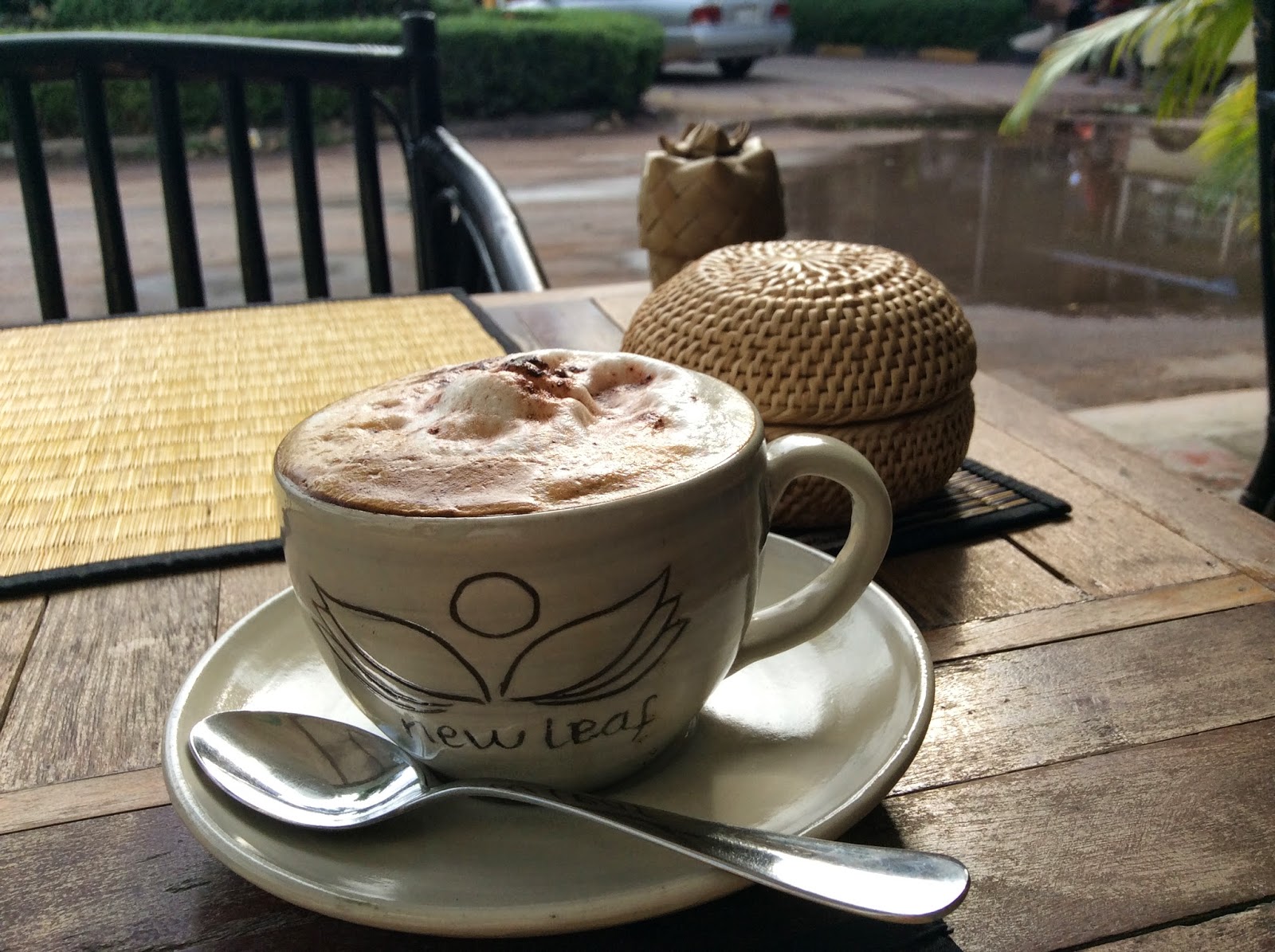
All awake at uncomfortable 4:40. B girl wrapped against air-con cold still sleeping. Me writing in bathroom, whir of extractor, yesterday thoughts disturb sleep hammered brain having succumbed to intermittent naps, taking edge from that crack of dawn early start and the rainy day leaving me now wide awake, restless, as she, my partner and hundreds of tourists sleep before breakfast in this growing whiter but still tropical town. I struggle with thoughts, preparing for the day. Letting her sleep. Chinese Foo in my mind as water colourist supreme, his sharing with eager Khmer minds. American Bill absent, yet forever with us as founder, guitar man, endless poet in the poem that is Colors of Cambodia in Siem Reap. Tuk tuk sir. Raggedy children clasp sugar cane juice, smiling lopsided smiles through innocent eyes. The compact gallery at Colors drips art into young minds with line wash shade and tones of existence. They are Dhamma children awakening. Later, watching elegance of her showering, all sleek lines feline grace water reflecting her beauty lines skin glistening singing siren lure. Waiting on breakfast fine rain kissing banana leaves monstrous grey concrete elephants dust be splattered small c.c motorcycles bare armed riders rush to work market home lovers still she sits opposite sculptured silhouetted by the brightening day. American not so pleasant breakfast at Moon Villa tries to hijack the day fails still desperate for coffee watch her load tuk tuk clothes for school. New Leaf Book Cafe watching temple roofs red piercing heavens slight cloud sun rising blue sky promises beat jeep languishing relic from past no longer forgotten, shaven head Eminem wannabe lopes past Wat contrasting orange draped monk on Dana mission. Tuk tuk sir. Round breasted Khmers abreast Scoopys ponytails streaming. A cappuccino day, tuk tuk sir, gamelan in air, rain gone, private delivery Phnom Penh Post coaster telling I heart Cambodia memories of Milton Glasser are you reading this James Merci to Mersea Siem Reap awakening. Life passing. Be hatted bearded European male pants past on bicycle in growing warmth cacophony supplanting gamelan Siem Reap modernising I shift to Wat seeking silence. Tuk tuk sir.


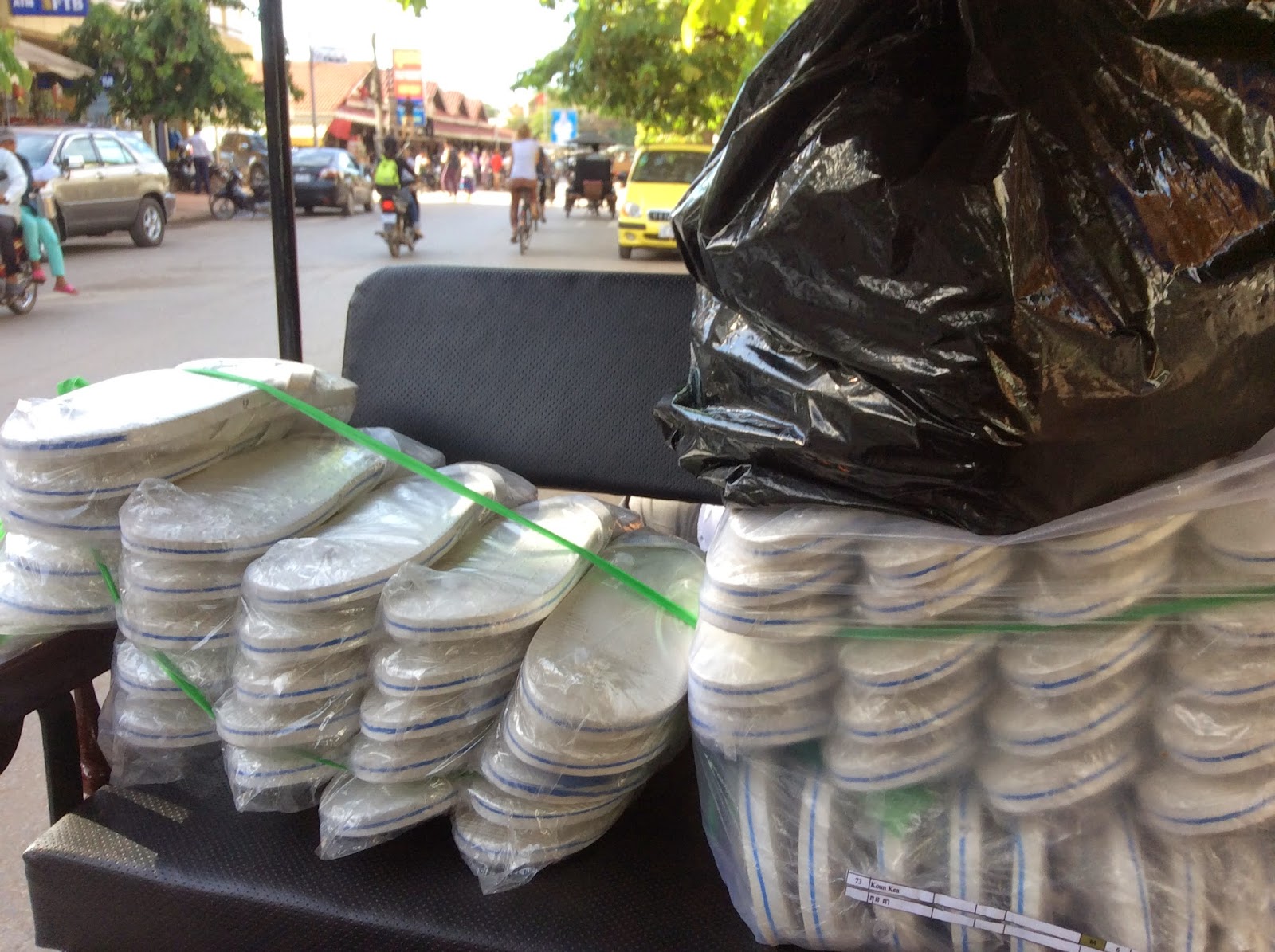
Tuk tuk sir. Sauntering old market squeezing past sellers of beef chicken pork eating yellow noodles pork fish sauce drinking iced local sweet coffee jump up. Tuk tuk sir, Yes. Driver Sitha loading slippers. Thai Zo school riding past yet more sellers of bottled petrol, convenient Molotov cocktails, down dirt track. School smiling faces headmaster waiting talking road repairs energy low need caffeine boost. More dust more heat. "Bong Bong chop chop coffee coffee" tiny glass not expresso local charcoal heated coffee laced in roadside market shack, Thai creamer, driver Sitha smiles. Englishman, two glasses coffee filling a gap but still insufficient no time. Long mud track. Tuk tuk to sponsored children's phoumi (village). Buffalo fields, egrets, long winding potholed road, real muddy water not blues singer, Khmer cycling woman carrying bamboo, children catching fish in sparkling green padi. Frog trap phoumi, leaping into unknown leads to frog rice. Cambodian market rice delivered to sponsored Cambodian student families. B girl sketching opposite pink lean-to, line by line capturing essence of rurality, simplicity. Sun blessed dappled baby sucking sweet mother milk in silence of Cambodian rural idyll satiating raw id/ego of sunshine child. TV arial pricks incongruously into rural sky. Padi calm. Pink dress girl carrying baby cycles under yellow-as-the-sun morning glory, papaya, banana. Cockerel squawks. Boy pisses on path, emancipated mynah pecking path flys. Noon heat cloud flecked sky, white butterfly heaven. Three children two dogs play padi water. Motorcycle family, marketing, return. Padi farmer abandons field. Raises mobile phone brown skin walking talking naked feet bringing dark footsteps to rural path. Padi breeze cools, dragonflies dance descending rising, gentle air-borne apsaras. Small naked girl runs squealing. Two bitches chase. Brown black younger dog collapses submits to older. Sniffs younger head to toe. Satisfied returns to post. Black dog hesitantly walks home.


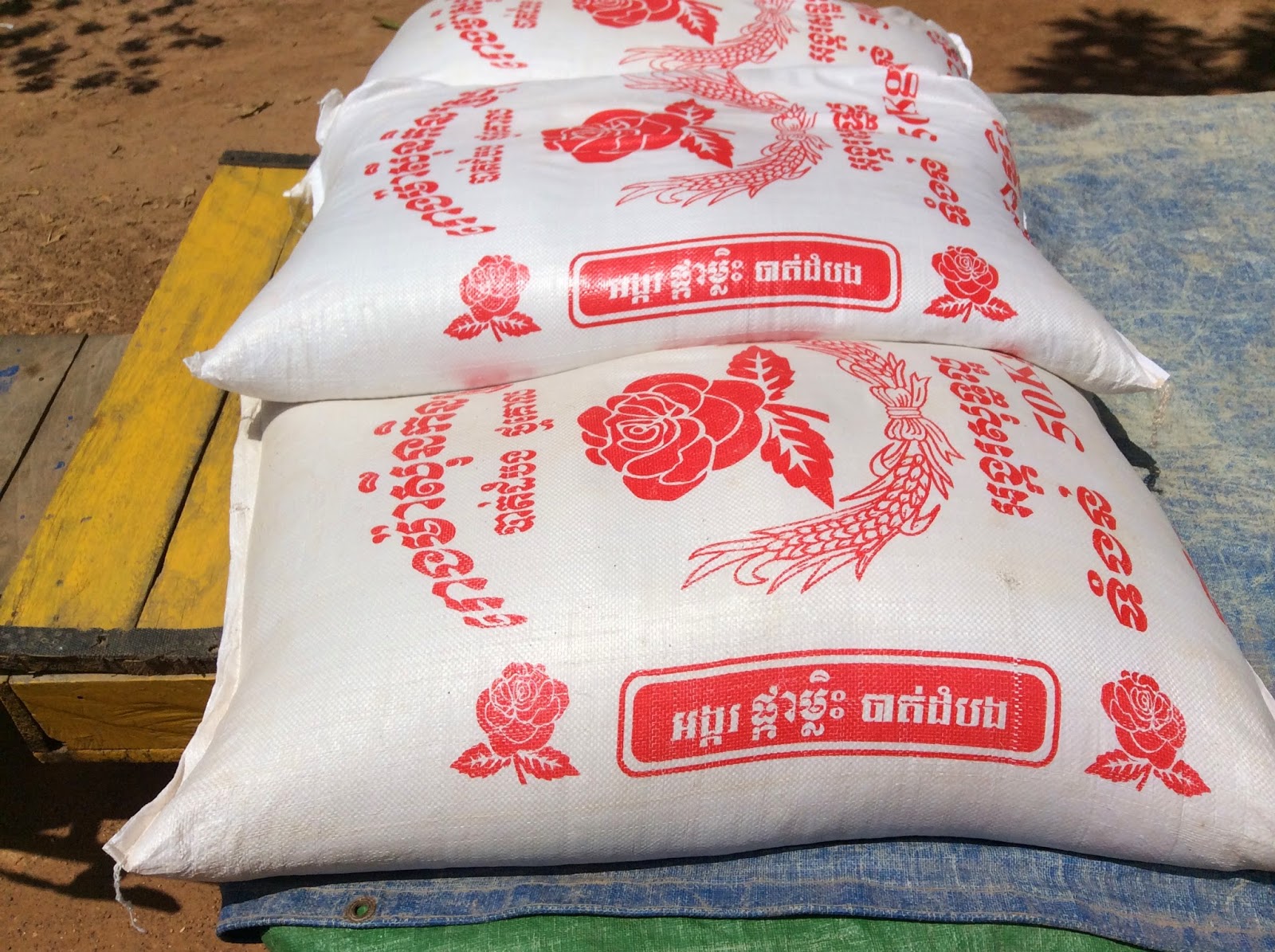
Morning Nai Khmer restaurant electric absent, sweat slowly, two eggs bacon bread iced coffee, shock sun bounces from land cruiser. Tuk tuk sir. Coconuts chopped splash juice into dry air. Hello batman tuk tuk flying Batman insignia driver Bruce Wayne, not Caped Crusader. It's a tourist jungle, Siem Reap. Air-con van travels sleepy dusty road out from Siem Reap, rushing past sleeping golden Buddha, sleepy sandy cows, endless padi stretching forever green into my soul. Fresh fires cook bamboo tubes stuffed with sticky rice, buffalo herders, ephemeral phallic haystacks pointing pornographically to skyline. Van motion bringing sleep, tired Chinese traveller dozes in orange T-shirt, backpack tightly clutched. Cambodian People's Party evident, not so rouge. Change track. Sodden earth not yellow but reddened, Thai Kubota RT 120 plough-tractor pulls simple trailer, takes three 50 kg sacks of rice with Chinese travellers, Khmer teachers, and one white man over track cratered by rain, revealing laterite, Muscovy ducks, emaciated hens, acres of emerald rice, rural stilt houses, naked children playing, benignly blue water lilies, wondrously white flowers, perfectly pink lotus, beautiful Buddha grace. Thirty minute bounce, toss, trundle past blue white clothed school children, effort driven bicycles, elderly Khmer napping 'neath huts blearily watching plough-tractor procession. At rural Siem Reap school, children file awaiting uniforms, shoes, equipment, clothes happily munching dry biscuits. Boy in striped pullover, not pyjamas, looks sadly on. The green vista calls to the pleasantness of the day, flat padi, thinking under blue sky, wishing on white clouds. Rose brand rice eked out between students for their families (Numbi), weighed out forever in fairness. Under tree mother in green sarong, green top, white hat, waits for laden child soon to come. Children line up once more for official sponsorship photo, keeping records straight. One child delves into her newly given bag, pulls out trousers, striped top, hugs them ever so preciously to her slight chest, smiles the biggest smile ever, smiles of happiness, smiles of gratitude, smiles of sweet contentment, love, harmony. Another measures jeans against her thin legs now knowing they will eventually fill the space, eyes the rice in the clear plastic bag, she smiles too. Stuffs her new belongings into her Snow White backpack, eyes the boy beside her and his Ben 10 bag. Tuk tuk sir. In the evening, slightly rested from the heat and the day's giving we rest at L'Osteria, Alley West, Siem Reap. Sea bass, roasted veg with smoked roasted cheese, followed by tiramisu brings smiles to our faces as I treat that hard working B girl in that ancient town. Jazz leaks from the restaurant into the mystic Cambodian chill. And, in the end, my love, her sleek black hair braided and now slightly peppered white, cools from the heat, she is elegant in that alley, radiating love amidst the smell of rosemary and Holy basil, love, joy and peace, Dhamma Baby in all her good deedness, child sponsoring, love giving, special way. She sits opposite and I love her in every way I can and in every way I cannot with my foibles and weaknesses. I love her as she loves Siem Reap in all it's roughness and incompleteness, in all its years and transgressions, tumbling stone, burning heat, Colors and colours and complications. Tuk tuk sir.


And, in the end, trouser belt removing, shoes off, computer tablet in separate plastic carrier moving slowly through metal detector, photographed, and quizzed we are in the departure lounge longing for home in no negative way. Arriving early to palm oil plantations, finger printing, we welcomed back to Malaysia.